
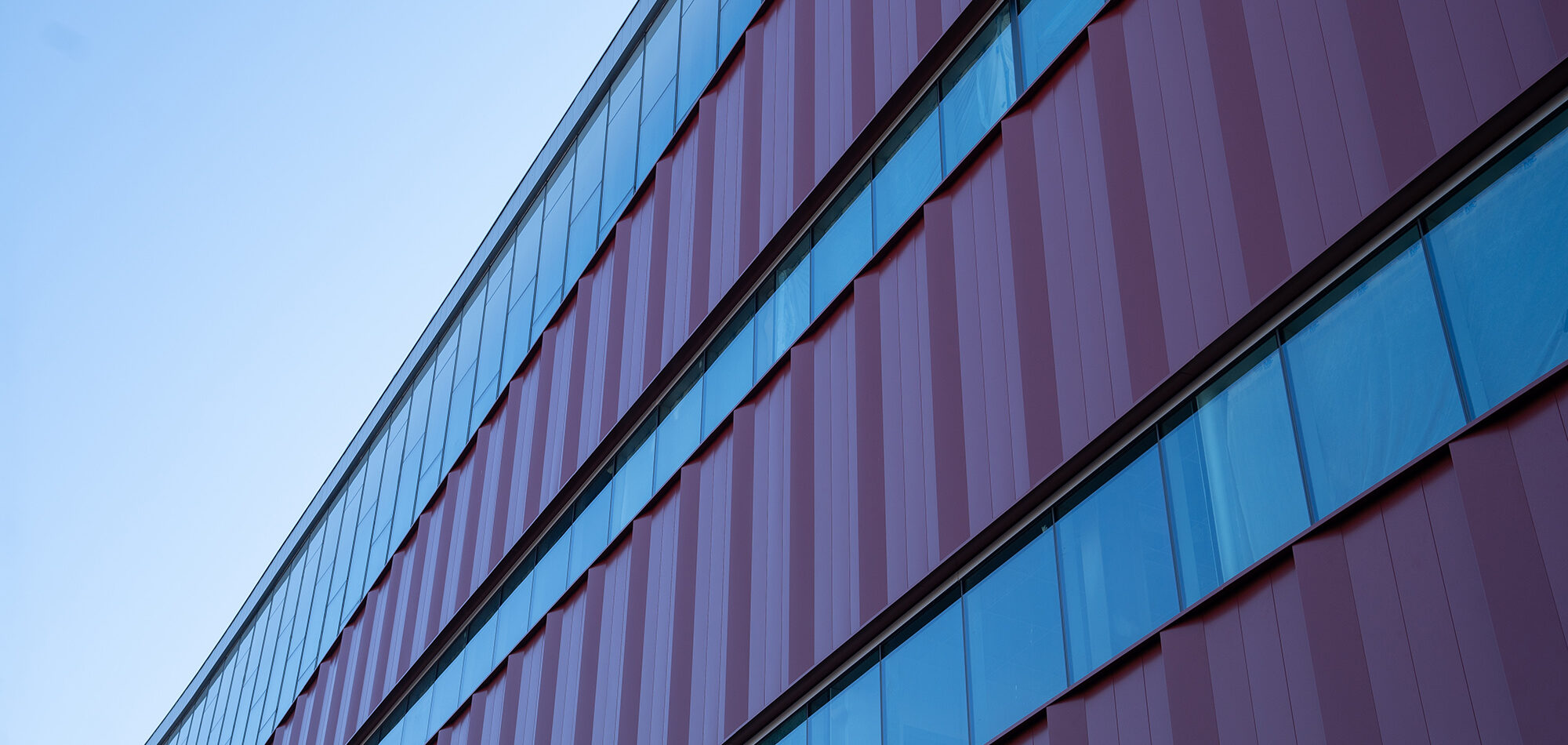
The view from below the new central lab shows off its sleek, modern exterior architecture, a reflection of the cutting-edge amenities found inside. MoDNR photo by Adam Knaebel.
For five Missouri state agencies, some of the most important public services they provide are performed not by front-line teams, but by scientists in laboratory settings complete with test tubes, microscopes and high-tech analytical equipment. For decades, these agencies have worked in their respective labs, desperately in need of physical and technological upgrades.
The needs of Missouri’s departments of Natural Resources, Agriculture, Health and Senior Services, Conservation and the Missouri State Highway Patrol will soon be met when the centralized state laboratory campus in Jefferson City opens. While construction should be completed in October, the departments will have to wait for inspectors to clear the facility for operation before moving in early next year.
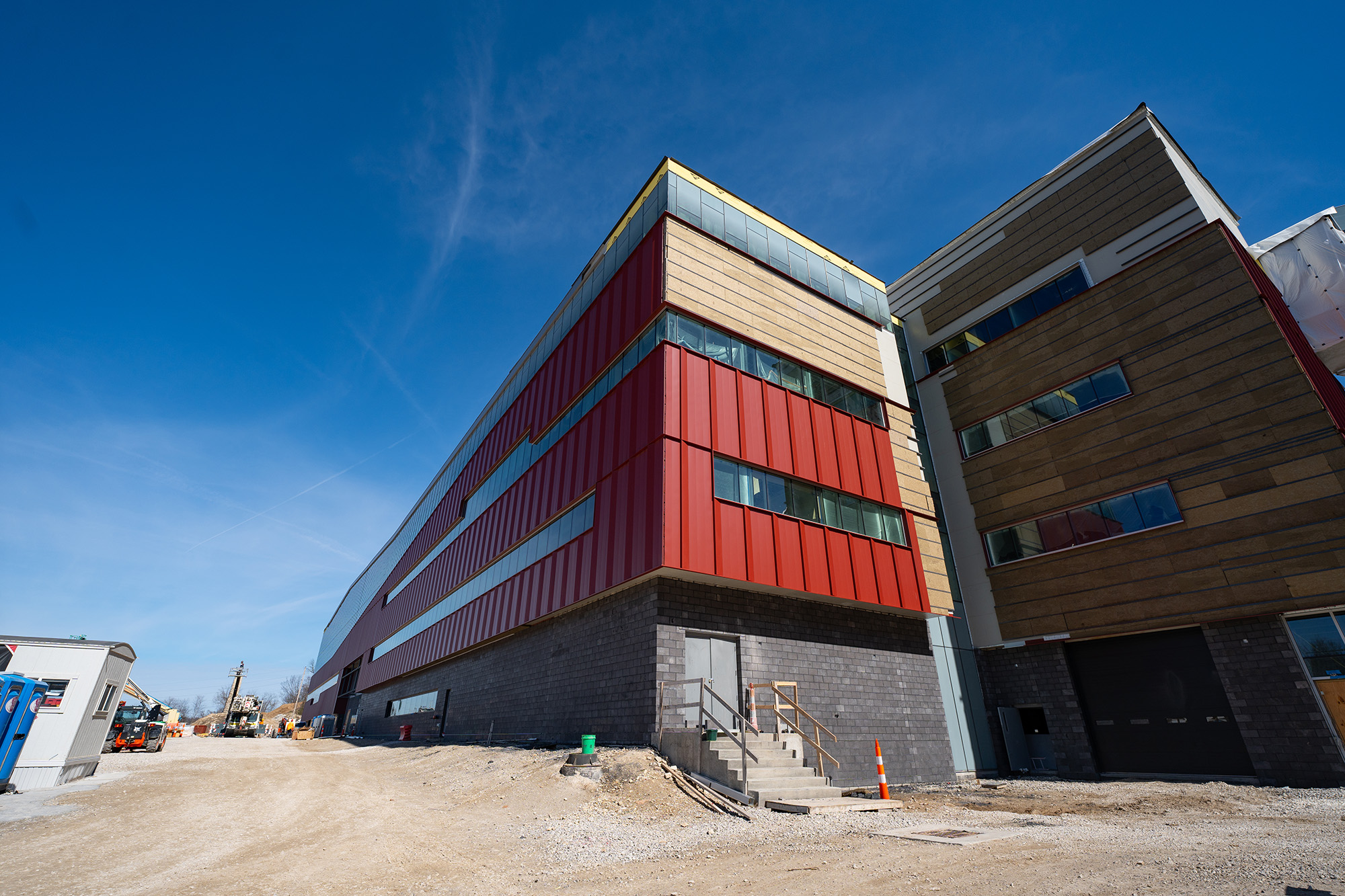
Located next to the current State Public Health Laboratory and funded through state appropriations from the federal American Rescue Plan Act, the new multiagency lab complex’s estimated construction budget is approximately $183 million. The Missouri Office of Administration’s Facilities Management, Design and Construction Division is managing the construction project.
According to the Office of Administration, the new laboratory complex will include an approximately 208,000-square-foot, multistory building and parking area to accommodate team members in all five labs. An elevated walkway will connect to the State Public Health Laboratory. The health lab will also add on a 13,000-square-foot expansion.
By coexisting on a single campus, the five agencies will benefit from a greatly enhanced ability to exchange information about testing and discoveries that may be relevant to their work. They will also be better able to share some of their technology, equipment, expertise and space.
“The Missouri Department of Natural Resources works alongside our partner agencies to help protect the health and safety of Missourians and our environment,” said Kurt Schaefer, director of the Department of Natural Resources. “I believe this new centralized lab complex will help all of us take a huge leap forward in our diverse but unified missions of safeguarding Missouri’s public and environmental health and safety by enhancing and expanding our capabilities and capacities to provide our respective services.”
The department conducts expert environmental analysis and provides fast response to environmental emergencies. The Environmental Services Program is the department’s focal point for these capabilities and is home to its lab and emergency response resources.


Air Quality Monitoring
The department manages public and environmental health by monitoring the air we breathe. The new lab will provide increased laboratory and operational space for our air-monitoring operations, allowing us to use state-of-the-art technology to more effectively monitor for ambient air pollutants that are major health threats. These include particulate matter, ozone, sulfur dioxide, nitrogen dioxide, lead and carbon dioxide.
Water Quality Monitoring
Like air, everyone depends on abundant, clean water for survival and health, so monitoring Missouri’s water quality is one of the department’s greatest responsibilities. To accomplish this, the department conducts an array of water quality analytical tests, such as water and sediment sample collection and analysis, biological monitoring, fish tissue monitoring and bacteriological analyses. With improved equipment and facilities, the department can more safely and efficiently support our field investigations and inspections to assess Missouri’s lakes, rivers and streams.
Chemical Analysis
The department also provides chemical analyses of public drinking water, air, soil, water and hazardous waste samples. The Environmental Services Program lab tests for volatile organic compounds, biological contaminants, heavy metals and synthetic organic compounds. Compared to the old facility, the new lab will feature cutting-edge infrastructure and added space to conduct chemical analyses.
To meet future needs, the lab includes space to add new instrumentation to test for emerging environmental contaminants that can cause acute or chronic health effects, such as per- and polyfluoroalkyl substances, known as PFAS. By expanding the department’s capability to test for new contaminants as they are identified, we can better protect Missouri’s drinking water and environment.
The lab team’s safety, as well as its ability to maintain the highest level of quality assurance and control of processes and results, are top priorities. The new facility will allow for better ventilation and air flow for the lab’s highly sensitive instruments in a temperature-controlled environment. This provides optimal instrument function and reduces instrument downtime while facilitating the most accurate data reporting.
The department will also gain a larger receiving and shipping area for better sample and supply management, including more refrigeration space to maintain sample quality. The multi-laboratory design will potentially make it easier for the different labs to share key supplies during emergency shortages or shipping delays.
“The new laboratory campus will greatly benefit Missourians by updating our ability and capacity to provide these crucial services,” said Lynn Milberg, Environmental Services Program director. “For our department, the new facility allows us to more effectively and efficiently serve our communities while improving team member safety and well-being, and we are very excited about that.”
Environmental Emergency Response
Highly trained and experienced staff in the department’s Environmental Emergency Response section stand ready to respond to environmental emergencies. The new lab facility will provide updated infrastructure to more effectively staff the department’s 24-hour emergency spill line that is crucial for coordinating environmental emergency response efforts. The facility is specifically configured to support training for and responses to a wide array of hazardous substance releases, natural and man-made disasters, and homeland security threats that could severely impact public and environmental health and safety.
The team also investigates hazardous and solid waste sites and sites with leaking underground storage tanks. The new facility will house specialized equipment and resources, maintained in a controlled environment, all of which will significantly strengthen the department’s environmental investigation capabilities.
“Our team members can’t wait to move into the new facility,” said Sean Counihan, Environmental Emergency Response manager. “We’ll have the up-to-date technology, equipment and space we need to more effectively train our teams, organize and house our specialized response gear and vehicles, and coordinate environmental emergency response efforts across the state.”
Current Environmental Services Program Facility
Constructed more than 30 years ago, the old building has numerous and growing challenges that have limited the department’s ability to provide key lab and emergency response services. Among them are a leaky roof and windows that need to be replaced. The lab’s fume hoods and fire alarm systems need replacement, and upgrades for the exhaust fan, air handling, ventilation, electrical and communication systems also are due. If the program were to stay in its current facility, it would cost the department an estimated $8 million over 10 years to adequately repair and maintain the building and operating systems.
Old Becomes New
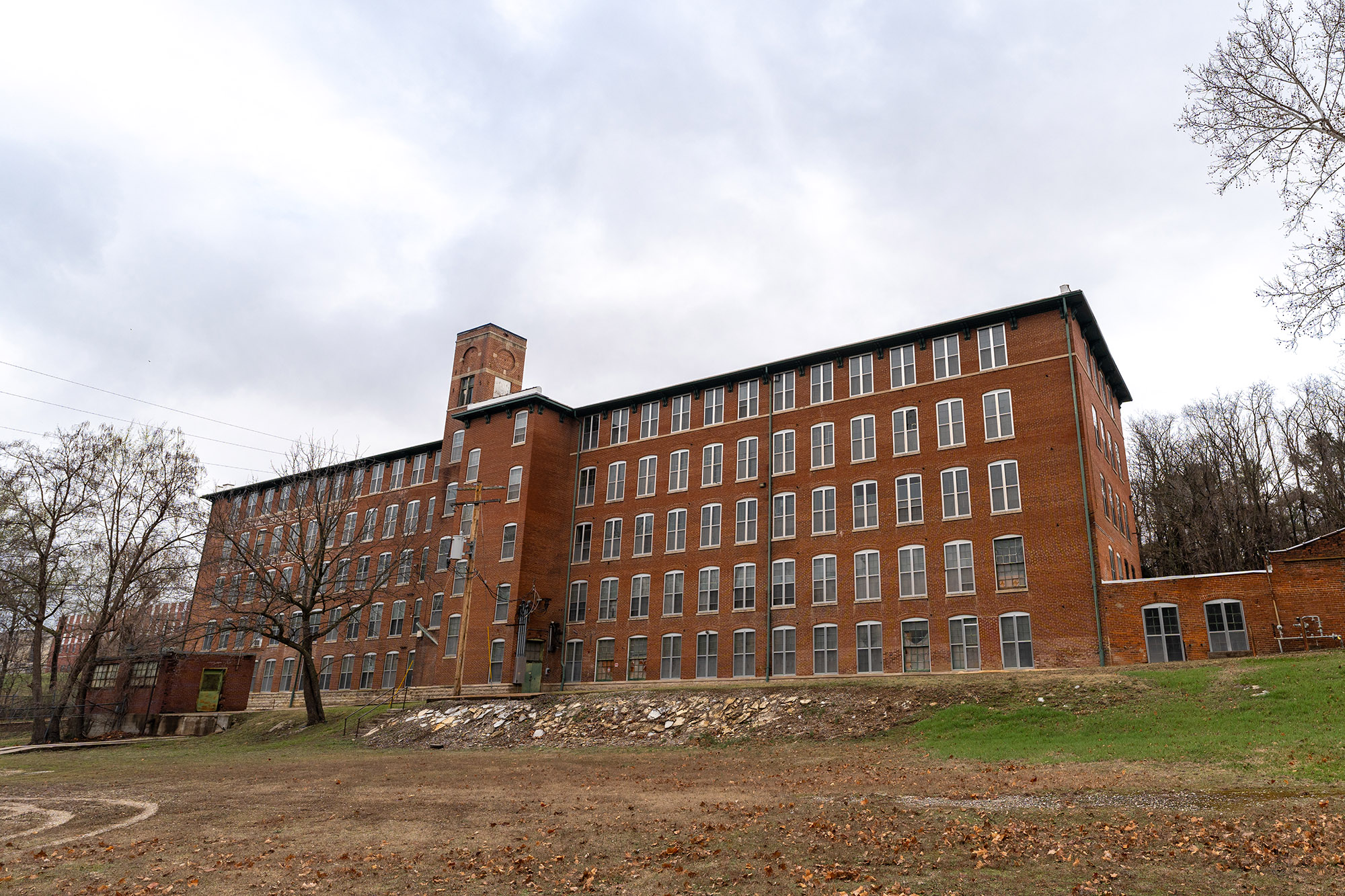
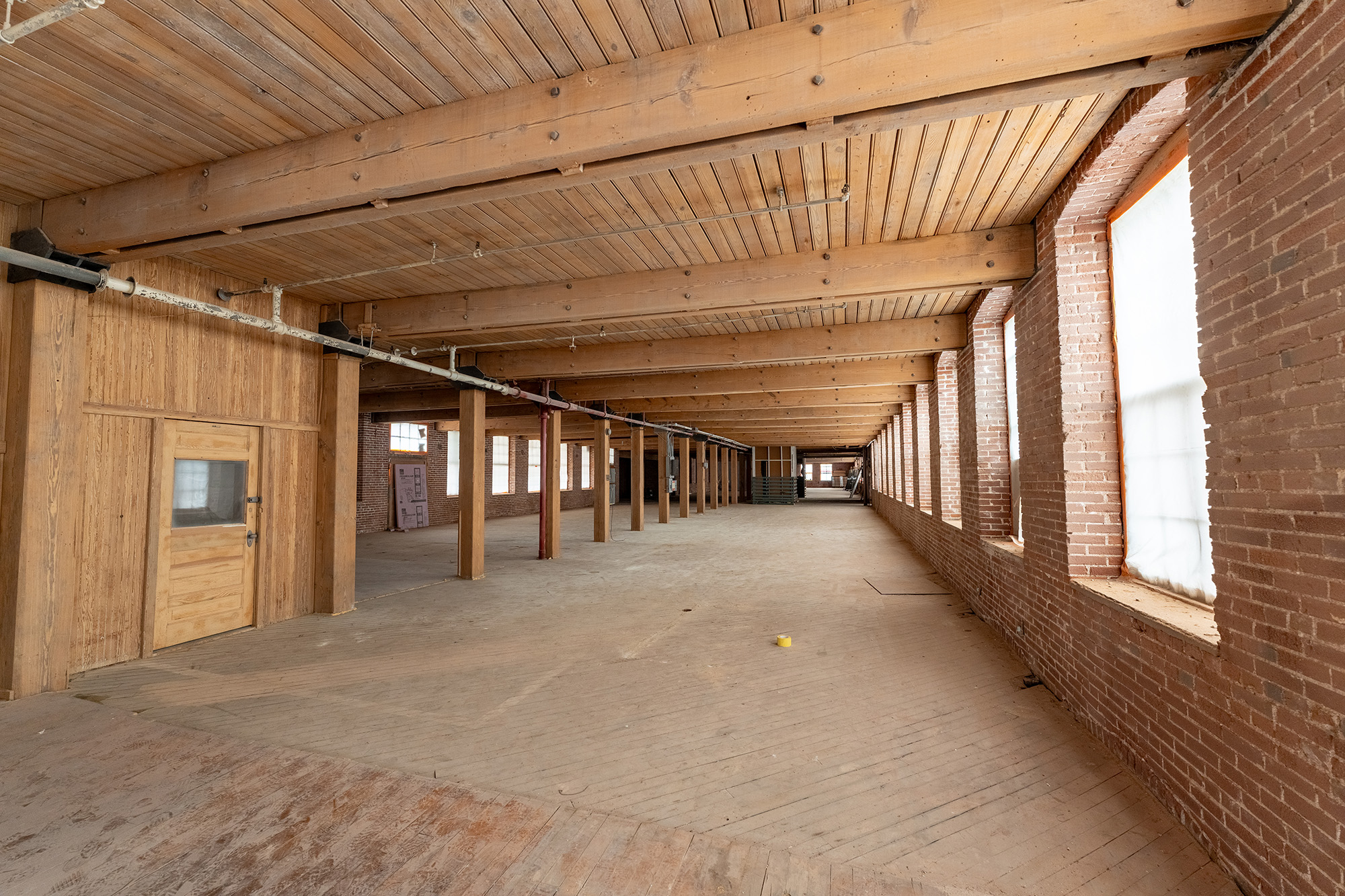
In addition to the new lab campus, the department purchased the nearby historical International Shoe East End-Main Street Factory. A five-story brick building listed on the National Register of Historic Places, the former shoe factory is located on 8.43 acres at 1101 E. Capitol Ave. in Jefferson City. When renovations are complete, the shoe factory building will provide new and much-needed office space for about 400 department team members who have worked in leased buildings for many years. This will bring them closer to their colleagues in the Lewis and Clark State Office Building.
Learn more about the Environmental Service Progream on the department’s website.