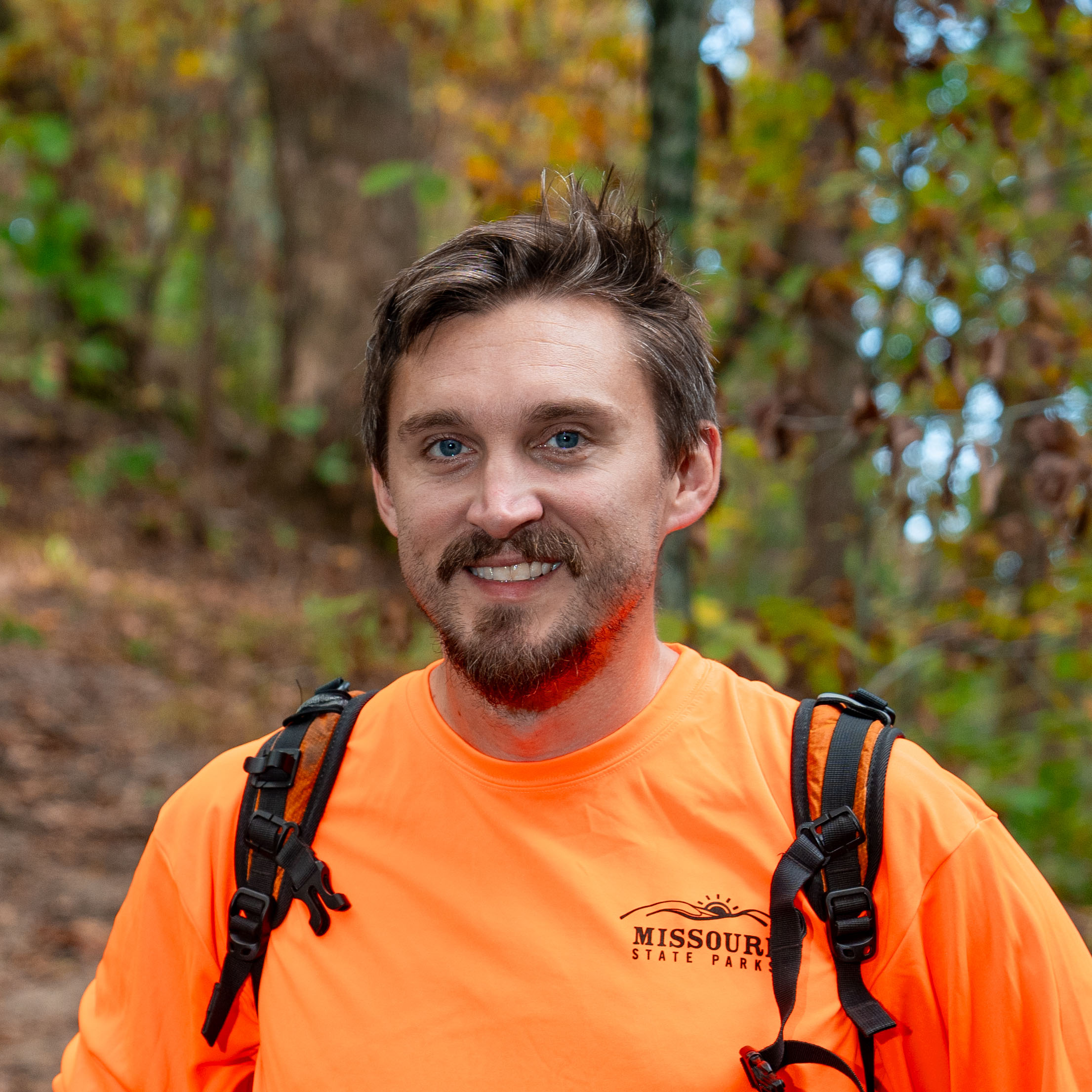
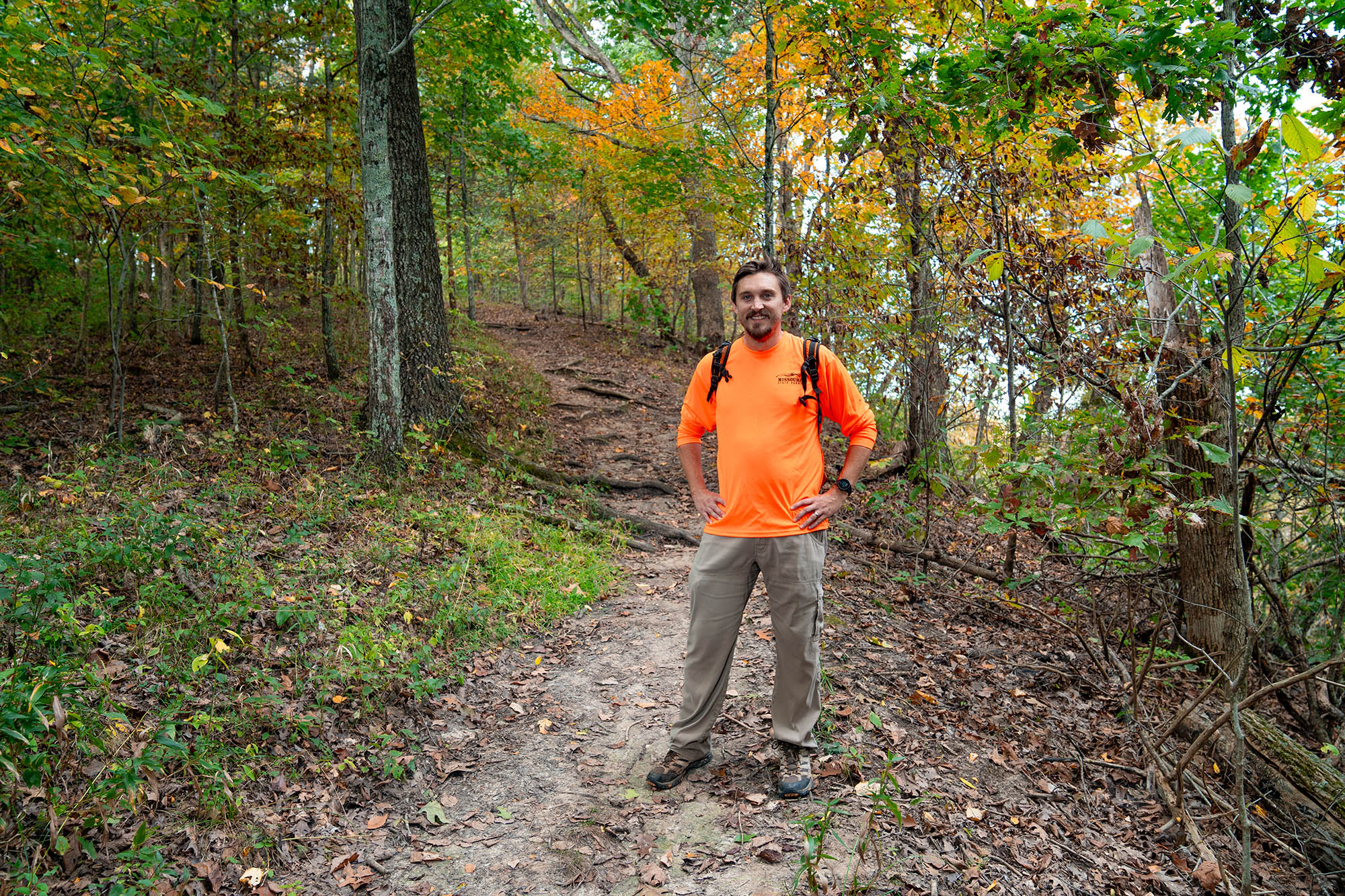
Logan Neurenberger, the trail coordinator for Missouri’s state parks and historic sites, hikes the trail at Clarks Hill/Norton State Historic Site. MoDNR photo by Adam Knaebel.
Hiking has been a passion of mine for as long as I can remember. I grew up in Missouri, camping and running around in the woods, but it wasn’t until I got older that I realized just how important outdoor recreation is to me. One summer during college, I joined the Missouri State Parks Youth Corps, an effort to recruit young adults to work in state parks around Missouri.
A year or so later, I was lucky enough to find a seasonal position with the Missouri Department of Natural Resources’ Division of State Parks. At the time, I worked directly under the supervision of the trail coordinator. That seasonal position turned into a permanent position. A decade later I was promoted to the trail coordinator position.
A huge amount of work goes into planning, building and maintaining trails before shovels, chainsaws and other tools enter the picture. We have more than 1,000 miles of trail spread across 70 of Missouri’s 93 state parks and historic sites, ranging from simple one-mile paved pathways to multi-mile natural-surface trails that span rugged Ozark landscapes.
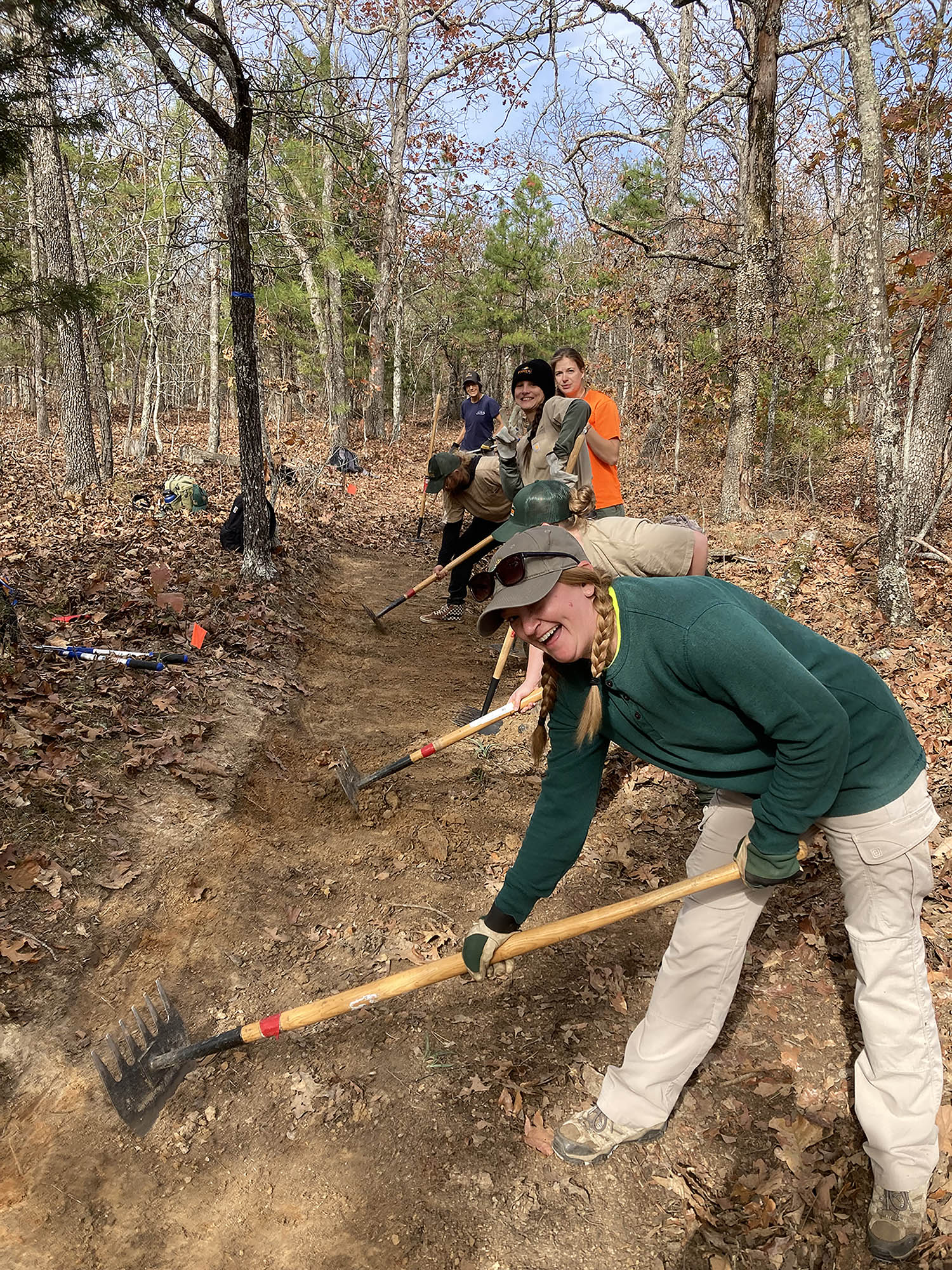
My philosophy is that trail systems should be considered part of a park’s infrastructure. They should not only provide recreational use throughout a park’s property, but also connect visitors to campgrounds, day-use facilities and remote natural and wild areas. Part of my role is to maintain a database of all trails in our state parks and historic sites so public information is accurate, and visitors can confidently plan for their trail experience.
Trails tend to change over time in response to extreme weather events, visitor use and the other impacts. Working with the division to stay on top of any issues that develop on their trails and supporting their efforts to address them is also part of my role. Recreation is just one component of the division’s mission to preserve and interpret the state’s most outstanding natural landscapes and cultural landmarks. As such, cultural historians and natural ecologists play key roles in deciding to reroute or expand an existing trail, especially when creating a new trail in an undeveloped area. New trails may require a large amount of planning to properly lay out a sustainable route and to navigate any cultural and natural concerns.
Trail projects usually begin at the park level, with staff identifying a need to reroute or add a trail. Sometimes staff have already identified a route or points of interest before they propose a project, but it can also start with just a loose idea. I work with staff to scout the area and lay out a trail design that is sustainable and provides recreational and interpretive value to the park, while considering the resource’s potential overuse and degradation.
Once a trail plan is fully developed, I help move the project through the clearance process, where the division’s cultural historians and natural resource ecologists can raise concerns about the planned route. If cultural, historical or sensitive ecological resources will be negatively affected by the proposed trail, I work with the park to alter the plan and address concerns.
After all the planning is finished and clearances approved, the trail is built. While our park teams are more than capable of building and maintaining trails, sometimes they must lean heavily on volunteers and partnerships to accomplish everything on the project list. We work with organizations like the Ozark Trail Association, Sierra Club, Back Country Horsemen of Missouri, Gateway Off-Road Cyclists and other groups to accomplish much more than we could on our own.
I feel like I have the best job ever. I get to travel around the state experiencing the best of Missouri’s natural resources and opportunities for outdoor recreation firsthand, all while getting to help develop and maintain those resources for others to enjoy. Over the years, I’ve been lucky enough to help guide development at many of our established state parks and historic sites, as well as several new parks that have recently opened to the public. I hope that my efforts will make a lasting impact on Missouri’s reputation as an outstanding place for outdoor recreation.
Learn more about trails on the Missouri State Parks website.