
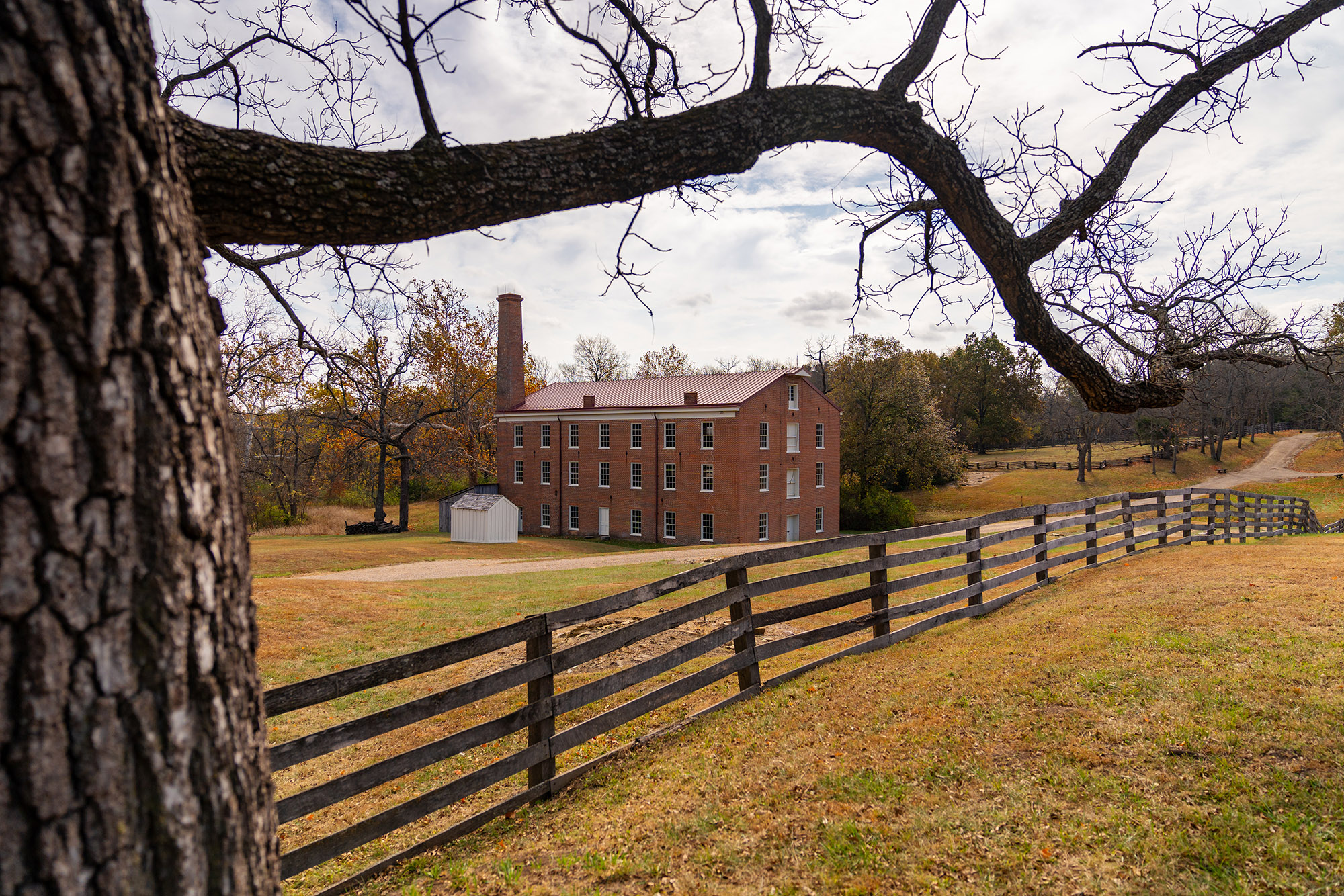
Watkins Woolen Mill State Historic Site was placed on the National Register of Historic Places in 1966. It was deemed unique because it hosts a near-perfect preservation of a 19th-century woolen mill.
On Oct. 28, 1963, demolition began on New York City’s famed Pennsylvania Station despite public protest and efforts to save it. Completed in 1910 and occupying two city blocks, the massive Beaux-Arts-style building was considered one of the city’s great architectural works, both for its Beaux-Arts exterior and for its ornate interior. It was also the main terminal to Manhattan, serving thousands of commuters daily.

The decision to demolish the station in the early 1960s was partly due to plummeting ridership and dilapidated building conditions. It was also part of a national trend after World War II to tear down aging and blighted buildings, and replace them with modern infrastructure in the name of urban renewal and revitalization. Federal programs such as the Federal Aid Highway Act of 1956, which established the Interstate Highway System, and the 1960s federal Urban Renewal Program were part of this trend. Both were meant to improve conditions and spur economic development but often led to wholesale destruction of historic buildings, neighborhoods and historic downtowns.
Preservationists have often cited public outcry and controversy over Penn Station’s demolition as the catalyst for the nation’s architectural preservation movement. It was certainly part of a larger reaction to losing the nation’s cultural heritage and prompted the U.S. Council of Mayors to form the Special Committee on Historic Preservation in 1965. The committee’s purpose was to investigate the status of historic preservation efforts across the United States and make recommendations for establishing a national preservation program. The committee published its recommendations in a 1966 report titled, “With Heritage So Rich.” The report’s recommendations became the foundation of the National Historic Preservation Act, signed into law by President Lyndon Johnson Oct. 15, 1966.
While the United States had passed earlier laws to foster historic preservation, such as the Antiquities Act of 1906 and the Historic Sites Act of 1935, the National Historic Preservation Act has been the most comprehensive and far-reaching national policy on preservation. Key provisions included:
- Establishment of the Advisory Council on Historic Preservation, the only federal agency created solely to address historic preservation.
- Creation of the Historic Preservation Fund, a matching grant program administered by the National Park Service to provide financial assistance to states for preservation activities.
- Establishment of the National Register of Historic Places and National Historic Landmarks programs.
- Establishment of the Section 106 review process, which guarantees that federal agencies consider how their actions affect historic properties listed or eligible for listing in the national register.
One of the NHPA’s most important outcomes was the formation of partnerships between the federal, state, tribal and local governments to carry out the act’s provisions. These partnerships take the form of state historic preservation offices, tribal historic preservation offices and certified local governments. Each of these entities is responsible for identifying and helping to preserve the historic resources within its respective jurisdiction.
By state statute, the Missouri Department of Natural Resources administers Missouri’s State Historic Preservation Office. Established in 1968, SHPO manages a variety of state and federal preservation programs, and provides diverse services to an ever-expanding preservation community. These programs and services include reviewing nominations to the National Register of Historic Places, overseeing architectural and archaeological survey programs, administering Section 106 review and compliance, managing Missouri’s Certified Local Government program, reviewing state and federal historic tax credit applications, and administering Historic Preservation Grant programs.


National Register and Survey
The National Register of Historic Places is an honorary list of districts, sites, buildings, structures and objects that are considered historically significant. SHPO’s national register and survey section oversees the process of identifying and nominating Missouri’s significant historic resources to be listed in the national register. The section coordinates with the Missouri Advisory Council on Historic Preservation and the National Park Service to review and submit national register nominations to the federal keeper of the national register.
The council is a governor-appointed body of preservation professionals and laypeople that reviews national register nominations and provides input on preservation issues.
Missouri currently has nearly 2,600 properties listed in the national register, with at least one listing in every county. A list of the nominations can be accessed on the department’s National Register Listings webpage.
Additionally, a Historic Sites and Districts map, showing all current national register historic sites and districts, certified local districts and architectural surveys that have been digitized, can be viewed on the MoDNR GeoPlatform webpage.
Architectural Preservation Services
The architectural preservation services section works with owners, architects and developers to ensure that rehabilitation projects qualify for rehabilitation credits through the Federal Historic Preservation Tax Incentives Program and the Missouri Historic Preservation Tax Credit Program. Initiated in 1977, the Federal Historic Preservation Tax Incentives Program provides a 20% tax credit for private-property owners to rehabilitate income-producing properties certified as historic. Missouri created a similar state program in 1997. The Missouri Department of Economic Development and SHPO jointly administer the Missouri Historic Preservation Tax Credit Program.
The Missouri Historic Preservation Tax Credit Program provides a 25% tax credit to rehabilitate certified historic structures in St. Louis and Kansas City, and a 35% tax credit if the property is located outside those cities. The state credit is available to both commercial properties and owner-occupied homes. Missouri ranks first in the nation for the number of completed rehabilitation projects using federal historic tax credits. Missouri is second – behind New York – for the total of qualified rehabilitation expenses associated with these projects. This highlights the importance and economic benefit of the historic tax credit programs.
Review, Compliance and Records
Section 106 of the National Historic Preservation Act provides a framework for federal agencies to ensure their actions don’t inadvertently harm significant historic properties. SHPO’s review, compliance and records section reviews federally assisted projects and comments on eligibility of properties for the national register. The section also comments on any possible effects to eligible or listed properties and makes recommendations to avoid or minimize adverse effects. The section aids government entities in administering state laws relating to archaeological properties and maintains records for cultural resource investigations and historic properties. These records are useful for planning the preservation of the state’s significant historic properties.
Community Services
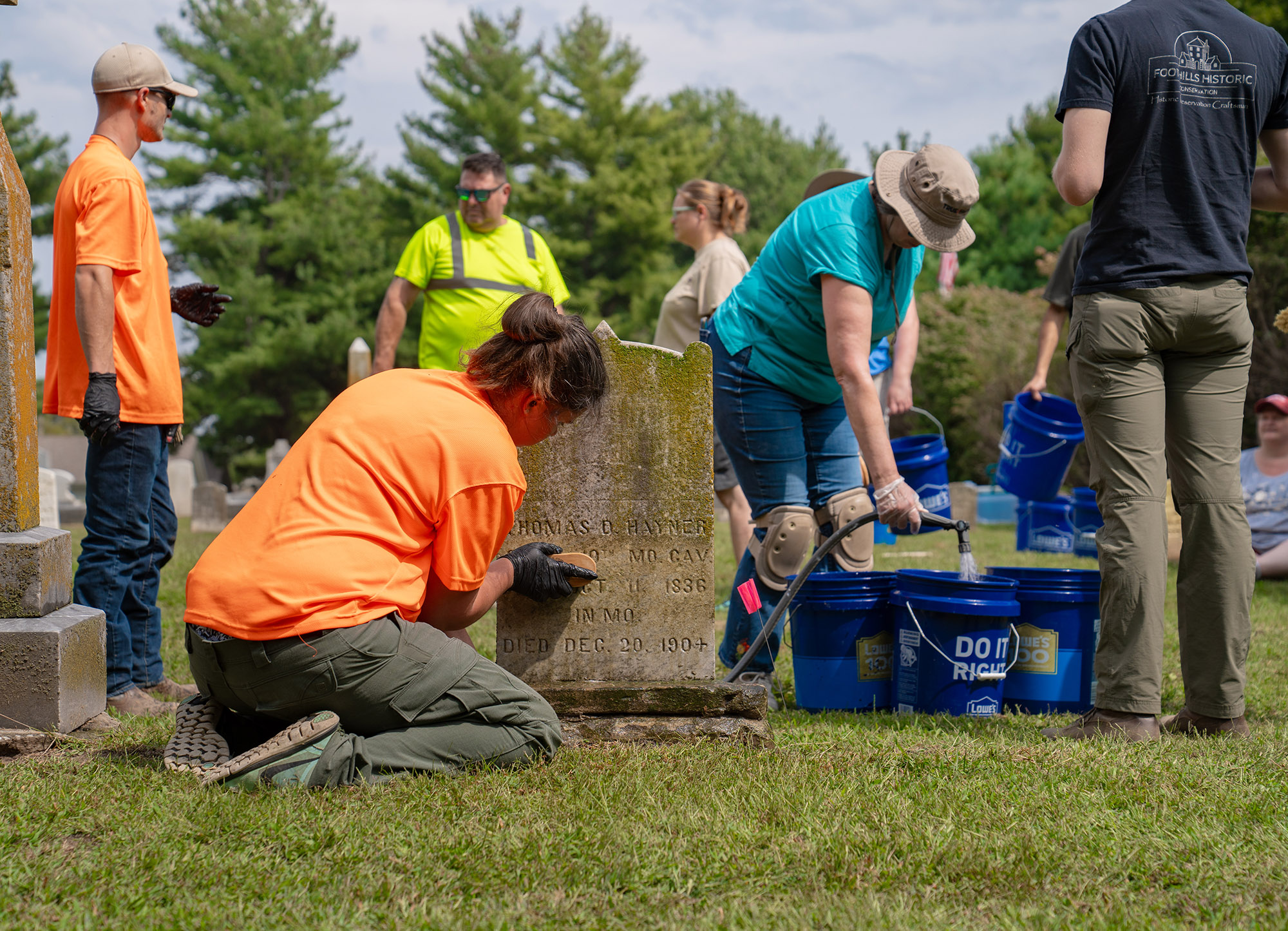
Local preservation efforts are the backbone of historic preservation, helping to create jobs, spur economic development through downtown revitalization and heritage tourism, and to safeguard and celebrate a community’s cultural heritage. SHPO’s community services section assists local preservation efforts through a variety of outreach workshops and programs, including the Certified Local Government Program.
The Certified Local Government Program provides a mechanism for local governments to protect historic places through historic preservation ordinances and preservation commissions, and for them to participate in state and federal historic preservation processes. The section also oversees the federal Historic Preservation Fund, a portion of which is made available to the public each year in the form of matching grants. The grants can be used for preparing national register nominations, conducting architectural and archaeological surveys, public education activities and initiating predevelopment projects for historic properties. An added benefit of being a certified local government is grant applications receive priority consideration, because states are mandated to give them at least 10% of their federal funding as subgrants.
For more information about SHPO programs and services, visit the department’s State Historic Preservation Office webpage.
You can also follow us on Facebook, where we post upcoming events, fun facts about Missouri’s historic resources and ways to become involved in preserving Missouri’s cultural heritage.