
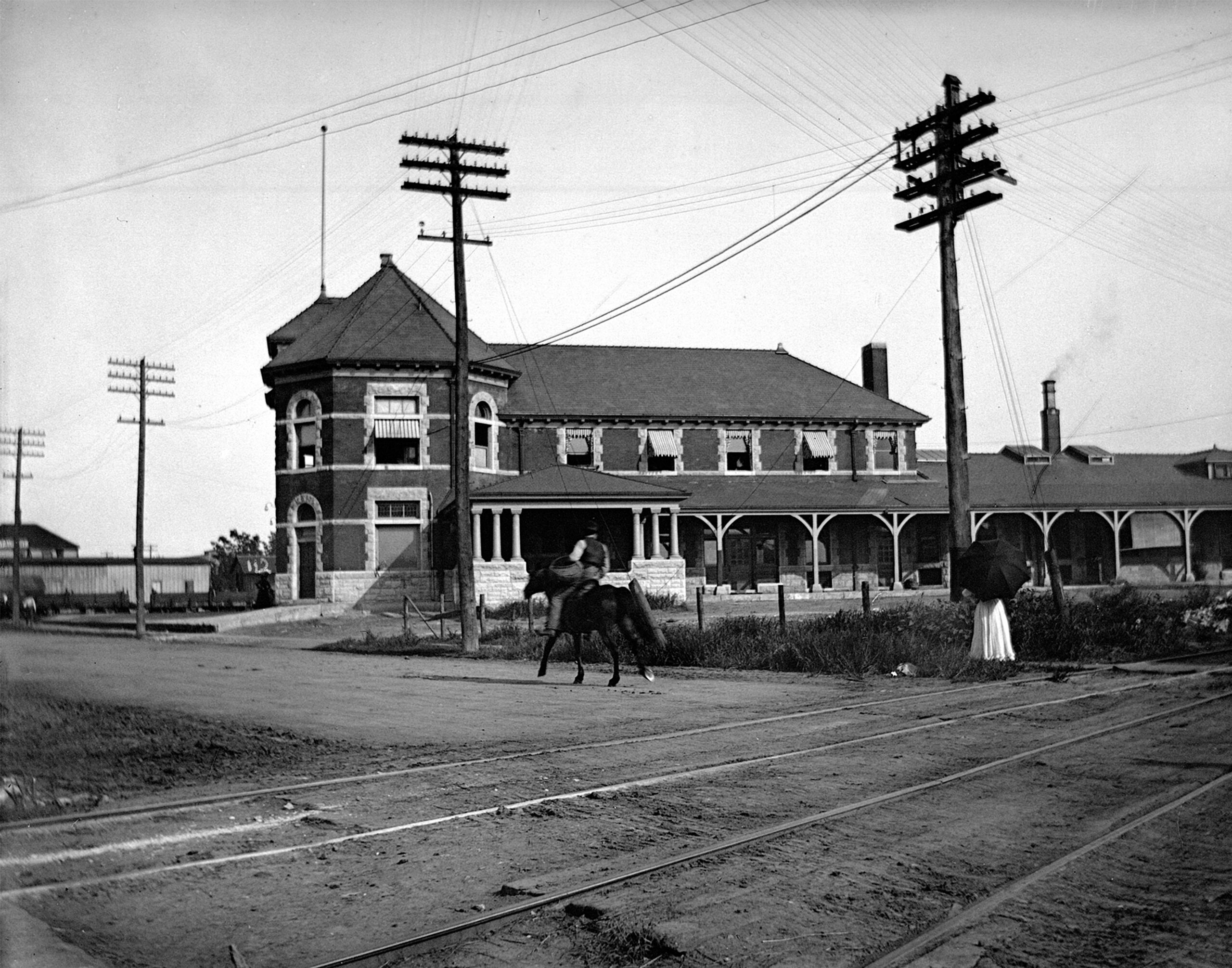
A man rides his horse to a young Sedalia Katy Depot in the late 1890s. J. Smith Collection photo by the Dixon Brothers.
The Sedalia Katy Depot appears much as it did when it was completed in 1896; bright-red brick draws the eye to the stately and massive structure that sits on the corner of Thompson and 3rd streets. Over a century of history has been etched into the space the building occupies, as visitors from all over the world traveling by train have stopped in Sedalia to rest and recharge before resuming their travels.
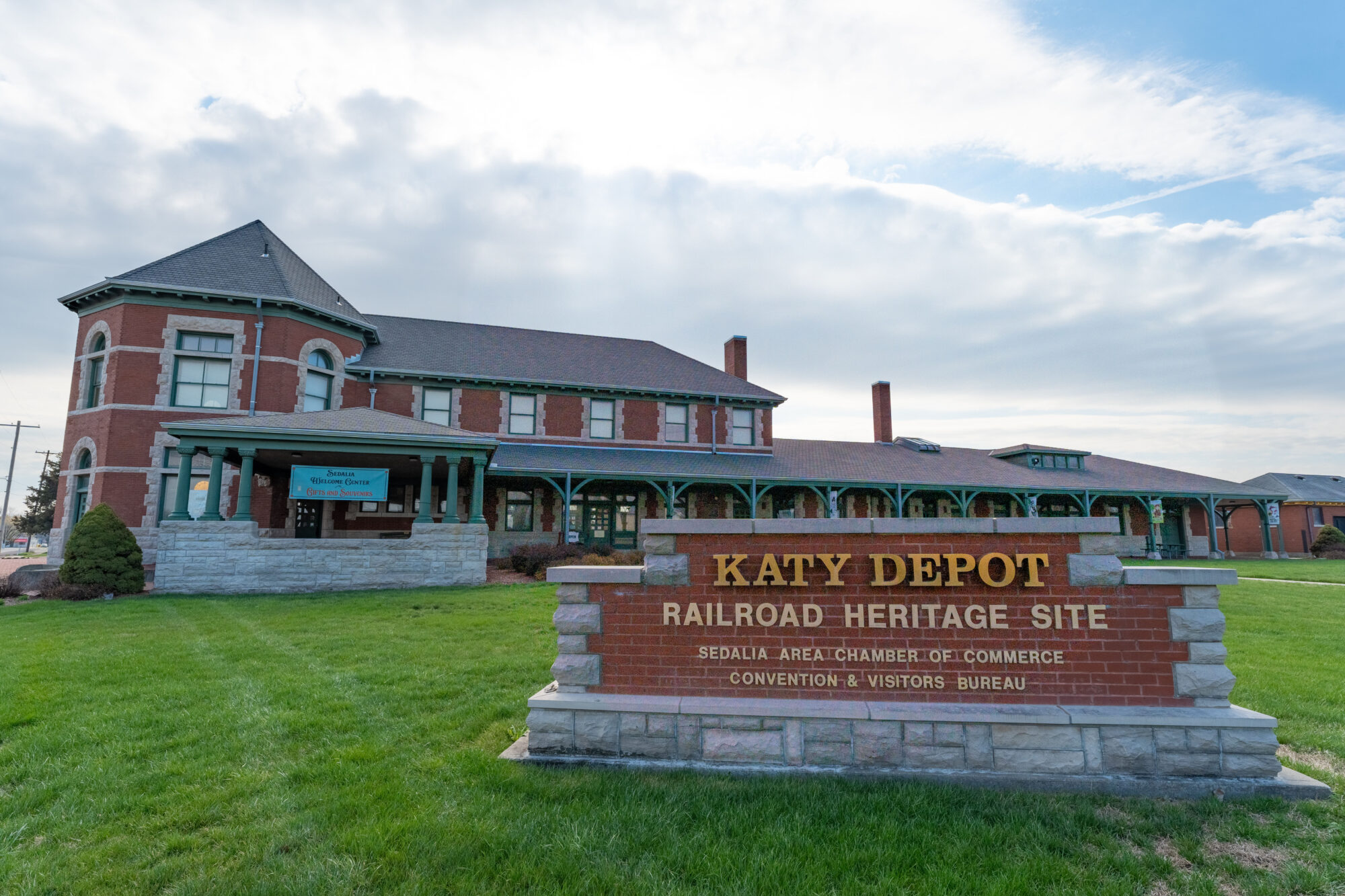
Of course, today’s guests dismount from their bicycles before entering the facility, but the building still acts as a destination for weary passers-through.
But that wasn’t always the case.
Deborah Biermann, former executive director of both the Sedalia Area Chamber of Commerce and the Sedalia Heritage Foundation, said if the National Park Service hadn’t listed the location on the National Register of Historic Places in 1979, it likely would have been torn down.
Passenger railroad companies ceased use of the Katy rail line in 1958, and the depot became obsolete not long after. After 30 years of disuse, the building became derelict. All but one window was either broken or boarded up, 3 feet of water stood in the basement, and a colony of pigeons inhabited the attic.
Restoration
The building gained a second chance at life when the Missouri Department of Natural Resources acquired and developed 240 miles of the former Missouri- Kansas-Texas, also known as the Katy rail line, from Machens to Clinton, as part of its new rails-to-trails-program.
Having determined the State of Missouri did not have an intended use for the depot, a search by the department for a managing tenant resulted in the selection of a proposal submitted by the Sedalia Area Chamber of Commerce.
The 1996 proposal would create a Sedalia Welcome Center to be housed on the first floor, along with a gallery of exhibits, a gift store, a community and visitor information center, a Katy Trail trailhead and a public use space. The second floor would house offices of the Sedalia Chamber of Commerce, along with the Sedalia Convention and Visitors Bureau.
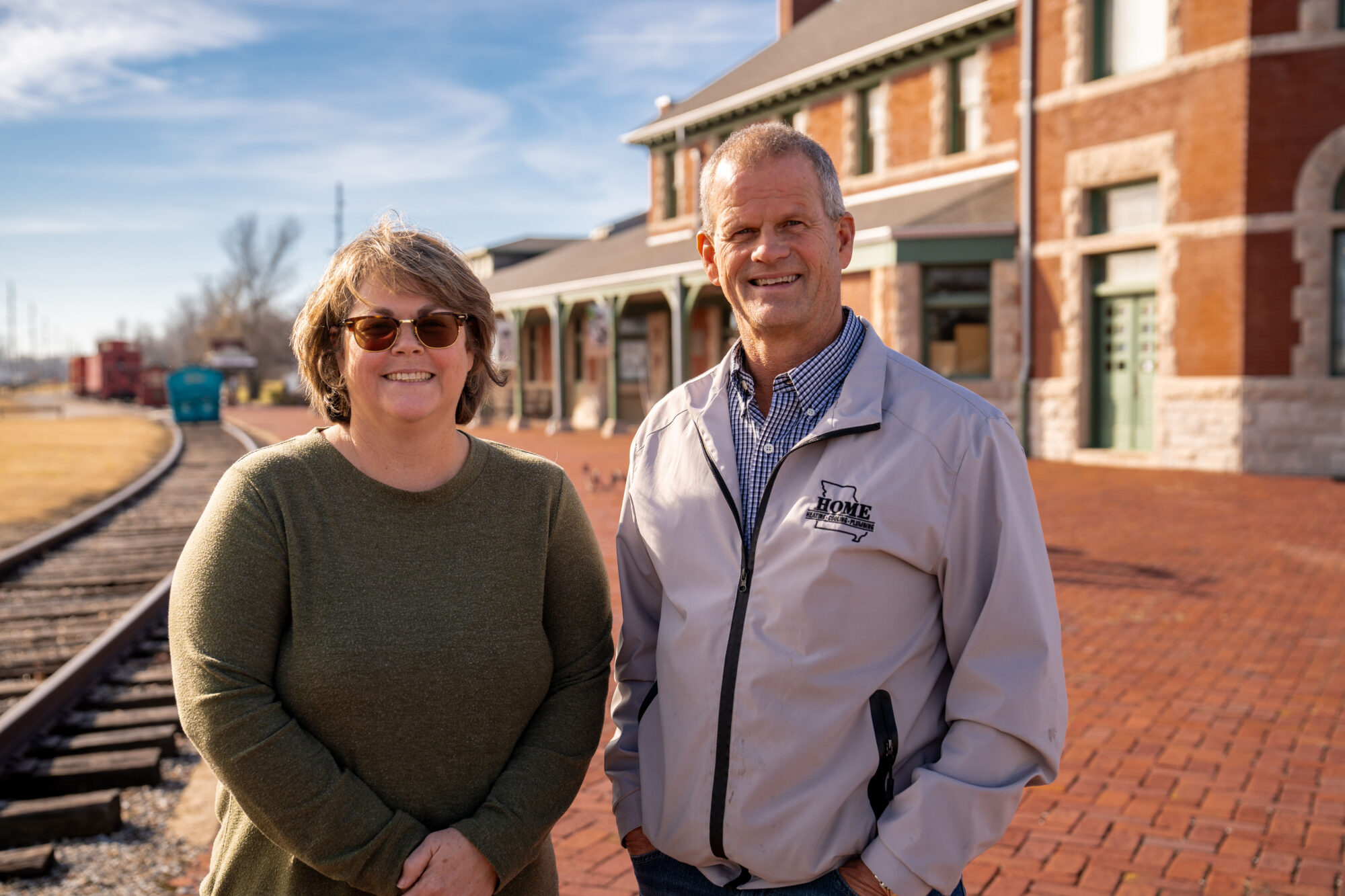
According to Kyle Herrick, former president of the Sedalia Chamber of Commerce, the proposal initially drew mixed reactions from the public. Even Herrick and Biermann had their doubts, knowing a monumental task lay ahead of them.
“Deb and I sat down together more times than one and asked, ‘Are we crazy?’” Herrick said. “And we continued to say, ‘No, this is the right thing to do.’”
After getting a chance to pitch the idea and show pictures of the facility to members of the public, popular opinion tilted in favor of the chamber’s proposal to revitalize the space.
Exterior renovations began in 1998 and included the replacement of the roof, gutters and windows, along with cleaning and tuckpointing the brick.
The tasks for indoor renovation, beginning in 1999, involved just about every indoor remedy imaginable. Construction crews gutted the building to the studs, installed insulation, added an elevator, replaced electric and plumbing equipment, and upgraded safety features.
All parties involved made it a goal from the beginning of the restoration process to keep as much of the original building as possible. In places where that wasn’t feasible, builders would try to replicate the original, which can be seen in the depot’s tin ceiling.
The original ceiling had rusted away after years of exposure to outdoor elements, making it unusable. Wanting to preserve the location’s aesthetic, the Chamber of Commerce contracted the company that made the original 1896 pressed ceiling tiles to replicate the original pattern.
Further improvements to the grounds and building included the addition of a parking lot, landscaping and memorial garden, development of a Katy Kids Club with model trains, placement of a caboose for a youth activity space and a buildout of exhibits.
Upon opening, public feedback was glowing.
“Everybody was amazed,” Herrick said. “This was a huge undertaking, but we all as a group felt like it was the right thing to do. A lot of sleepless nights thinking about all that could go wrong, but always having the willpower and desire to not let it fail.”


Present Day
Upkeep on the original structure continues as needed with repairs being made to portico columns and the base of the building in 2013 to shore up the structural integrity, said Daniel Brigman, superintendent of Knob Noster State Park. Brigman’s team helps with the depot’s upkeep.
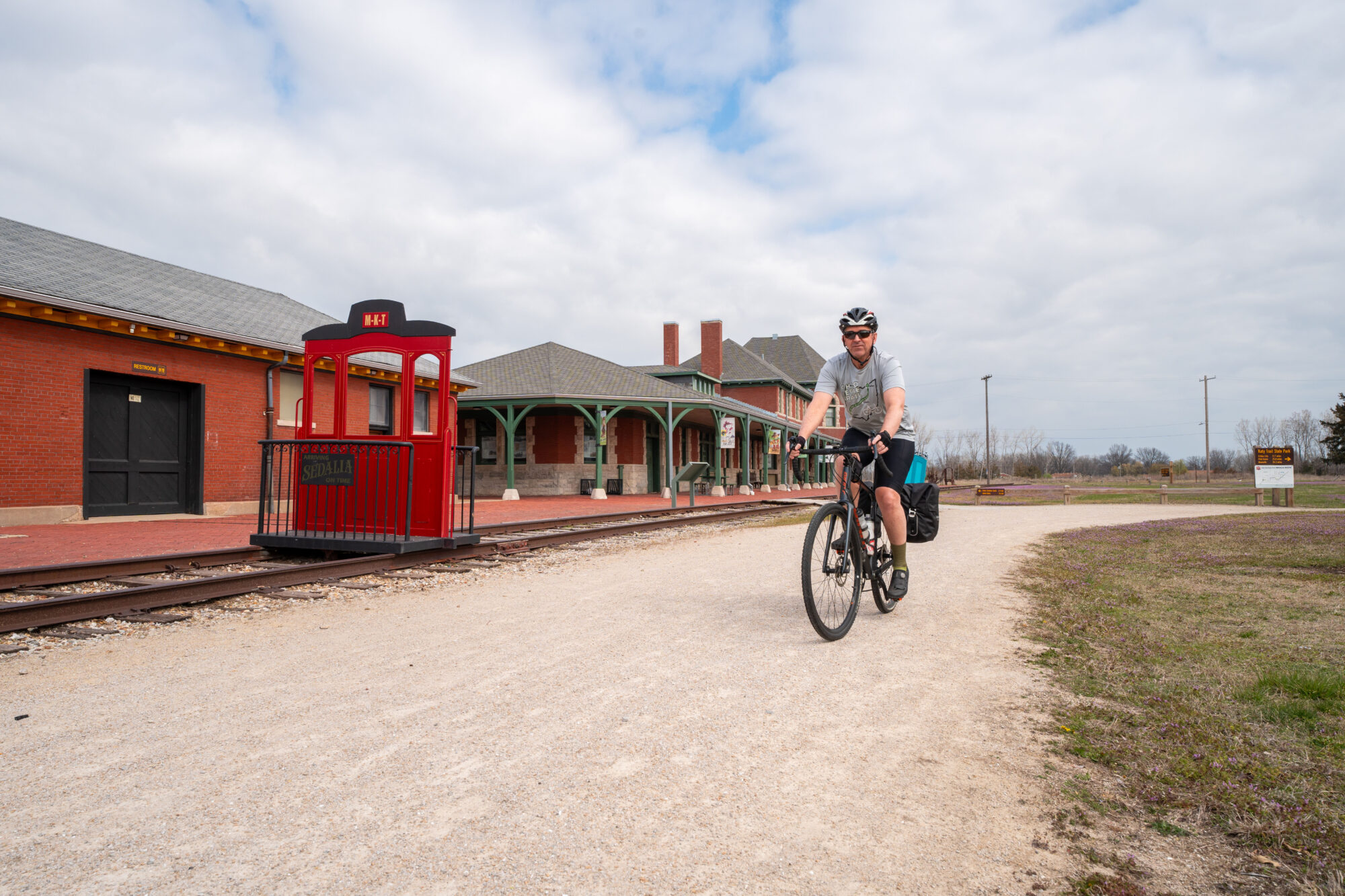
While the building undergoes constant upgrades, Missouri State Parks’ Cultural Resources Program also takes steps to ensure that the aesthetic and appearance of the original building are replicated during any major updates.
“It’s a constant back-and-forth to make sure the building is kept the way it would have looked in 1896, or as close as possible,” Brigman said.
Jill White, site manager of the Sedalia Katy Depot, said the building still plays host to around 15,000 travelers annually, having attracted visitors from every continent except Antarctica.
For Biermann, the satisfaction of restoring the depot was personal as well as professional. Her father, his three brothers and her grandfather all had jobs working for the railroad.
“It was kind of in my blood, in a sense — growing up in a railroad company with a family that was so plugged into it,” Biermann said. “I’m thankful this landmark of Sedalia’s railroad heritage lives on.”